
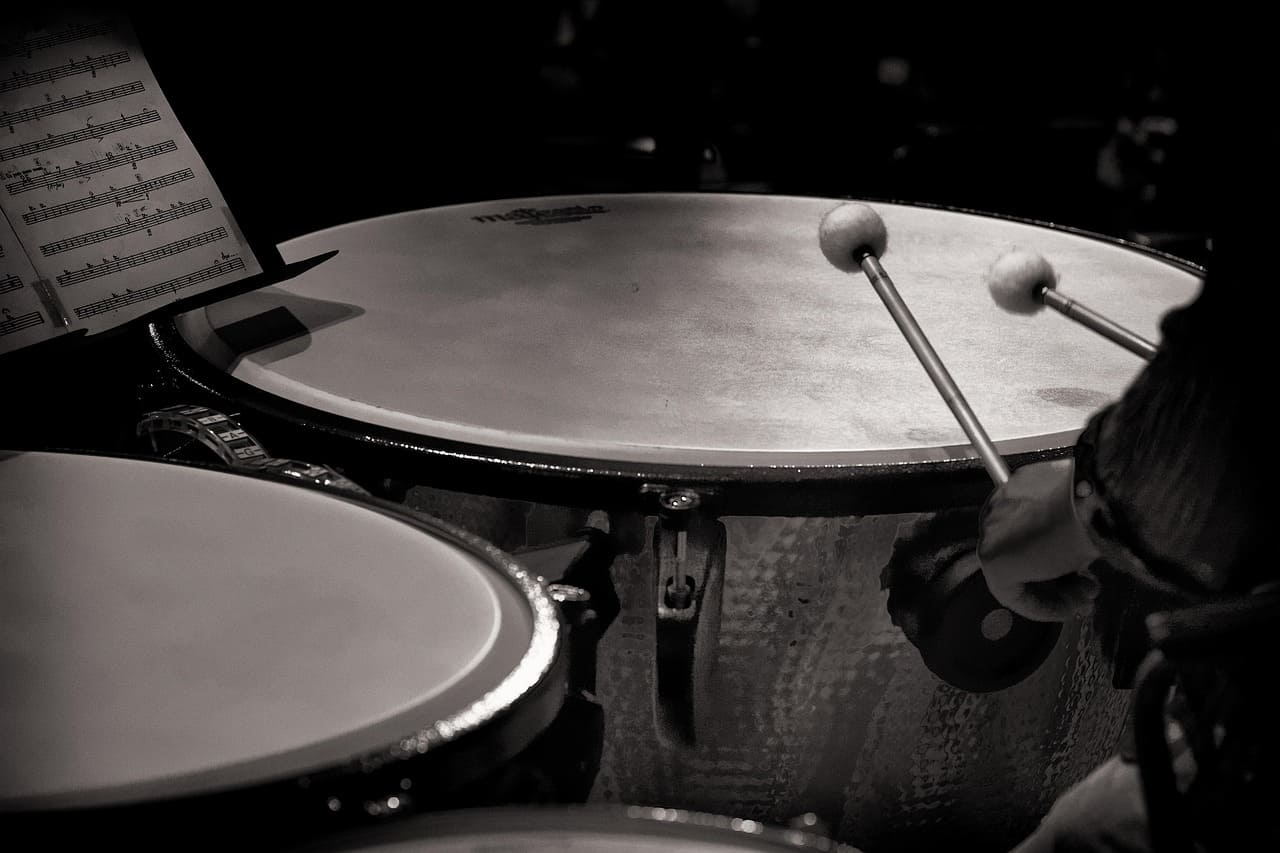
Timpani are the drums that make music feel bigger. One well-timed roll can build suspense like a storm gathering over the horizon, and one clean strike can turn a quiet moment into a dramatic turning point. Often called kettle drums, timpani sit at the intersection of rhythm and pitch, which is why they’re so powerful in orchestras, concert bands, and cinematic music. They don’t just keep time—they shape emotion. When you learn how timpani work, you start hearing them everywhere: the swelling tension before a chorus hits, the booming punctuation at the end of a phrase, and the subtle heartbeat under a delicate melody. In this Sax and More Music guide, we’ll explore what makes timpani special, how players get such precise sound, and how different types—like marching setups—bring that power to new settings.
What Timpani Are and Why They’re Different
A timpani drum is a large, bowl-shaped instrument with a stretched drumhead on top. Unlike many drums that have a fixed pitch, timpani are tuned to specific notes. That means a timpanist isn’t only thinking like a drummer—they’re thinking like a musician who supports harmony and melody.
This is why you’ll hear people say percussion timpani when they want to emphasize that timpani belong to the percussion family, yet they behave differently than a snare or bass drum. Timpani are both rhythmic and tonal. They can anchor chords, reinforce bass lines, and add dramatic emphasis without cluttering the music.
How Timpani Produce Pitch
Pitch comes from tension. The drumhead’s tightness determines the note, and players adjust that tension to match the music. In many setups, a pedal helps shift the pitch quickly, allowing the timpanist to move between notes during a performance.
That ability makes timpani instruments unique. They can play tuned patterns, roll through sustained notes, and hit clean attacks that blend with the orchestra’s harmonies. A great timpanist can make a note sound rounded and musical, not just loud.
The Sound Palette: Rolls, Strikes, and Color
Timpani can do far more than “boom.” Their sound palette includes:
- Single strokes: clear, focused hits that punctuate a moment
- Rolls: rapid alternating strokes that create sustained sound and build tension
- Dampening: stopping the vibration to keep notes clean and controlled
- Tone shaping: changing where and how the mallet strikes for different colors
Mallet choice also matters. Harder mallets can make the attack sharper and brighter; softer mallets can create a warmer, rounder sound. This control is what gives timpani their cinematic reputation—you can whisper with a soft roll or shake the room with a thunderous strike.
Percussion Timpani in an Ensemble: The Emotional Engine
In an orchestra or concert band, timpani often function like an emotional engine. They can underline a climax, hint that something is coming, or provide a heartbeat beneath a melody. Sometimes they’re obvious; other times they’re subtle and supportive, reinforcing the bass movement so the ensemble feels grounded.
Timpani also interact with other sections in interesting ways. They can lock in with brass to make fanfares feel huge, or they can support strings by emphasizing harmonic changes. Even in passages where the melody is carried by fiddles—especially in folk-influenced orchestral pieces or crossover arrangements—timpani can add dramatic depth underneath that lively string energy. The contrast is striking: bright, nimble fiddles above, deep, resonant timpani below.
Marching Timpani: Power on the Move
Marching timpani bring the spirit of the timpani drum into outdoor and mobile performance settings. Historically, marching timpani were designed so players could carry tuned drums and perform while moving, often in marching bands or ceremonial contexts. The goal is similar to orchestral timpani—tuned impact and dramatic emphasis—but adapted to a different environment.
Because outdoor sound and movement add challenges, marching timpani setups focus on projection, stability, and portability. The sound can be more direct than orchestral timpani, but the musical role is still about bold punctuation and rhythmic energy that supports the whole ensemble.
What Makes a Great Timpanist
Timpani playing is about discipline and musicality at the same time. Great timpanists develop:
- Ear training: being able to tune quickly and accurately
- Timing: placing notes exactly where they belong
- Dynamic control: playing thunderously or quietly with equal confidence
- Consistency: producing the same tone every time
- Musical judgment: knowing when to lead and when to support
Because timpani are tuned, mistakes can stand out—an out-of-tune timpani note can clash with the harmony. That’s why the role demands careful listening and a strong sense of pitch, not just rhythm.
Conclusion
Timpani are more than big drums—they’re tuned instruments that shape the emotional arc of music. Whether you’re hearing percussion timpani building suspense with a roll, listening to timpani instruments reinforce a powerful brass moment, or feeling the impact of a timpani drum strike at the end of a phrase, these drums add weight and drama in a way few instruments can. Even in settings where the spotlight belongs to fiddles or other melodic voices, timpani provide the deep foundation that makes the whole ensemble feel alive. And with styles like marching timpani, that dramatic power can move beyond the concert hall and into the energy of outdoor performance. Once you start listening for timpani, you’ll realize they’re often the reason a moment feels unforgettable.