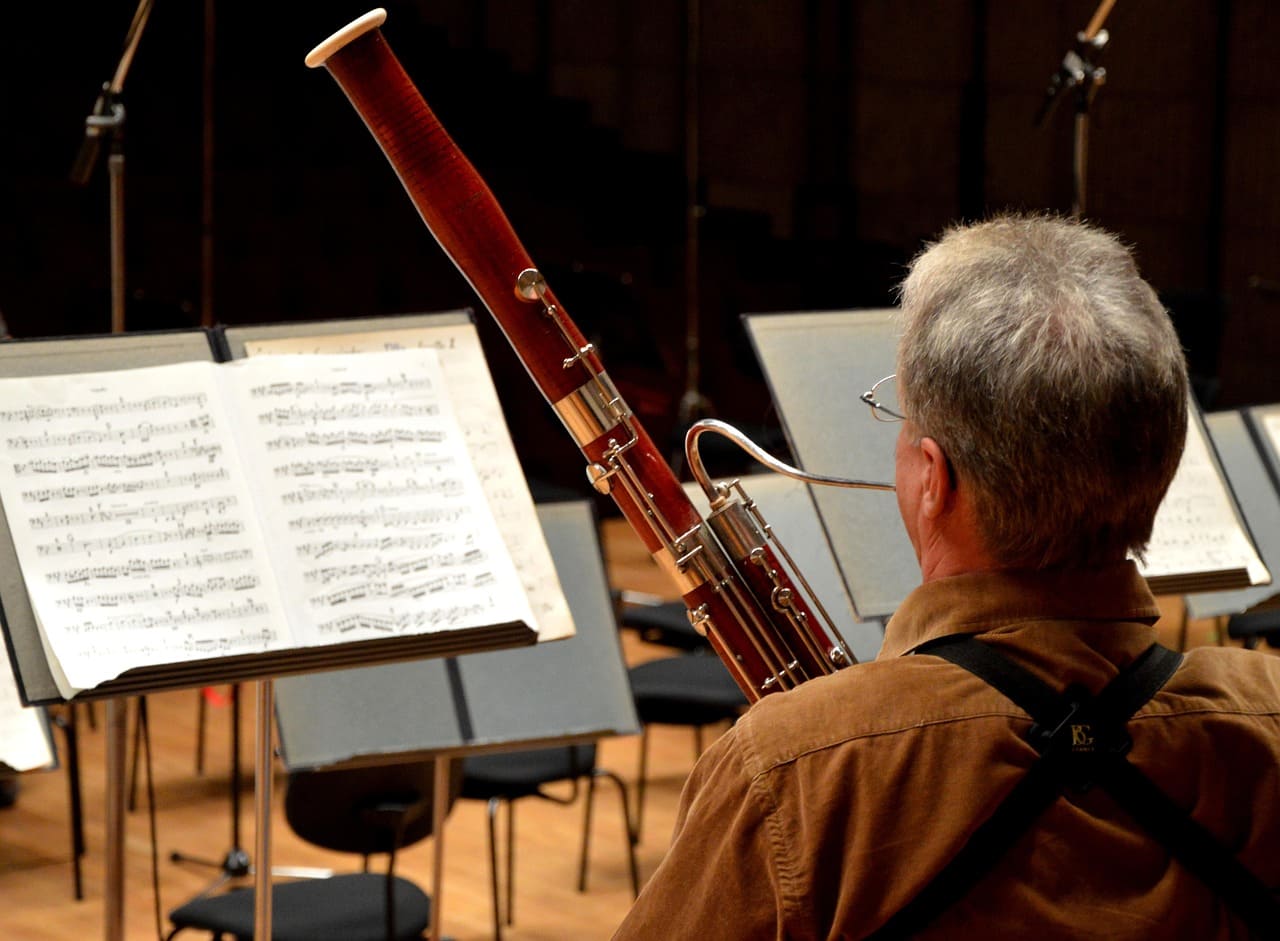
The bassoon is one of the most distinctive voices in the orchestra and concert band—deep, woody, and surprisingly expressive. It can sound playful and cheeky in one moment, then turn dark and dramatic in the next. Many listeners recognize the bassoon by its rich low tone and its ability to “speak” like a character in a story. That personality is why the bassoon shows up in everything from classical symphonies to film scores and modern ensemble writing. For players, it’s an instrument that rewards patience: it takes time to build a steady sound, but once you do, the bassoon becomes a powerful musical tool with a huge emotional range. In this Sax and More Music guide, we’ll explore what the bassoon is, how it works, and why its family—including larger versions—makes such a strong impact in ensemble music.
What the Bassoon Is and How It Produces Sound
A bassoon instrument is a woodwind that uses a double reed—two thin pieces of cane tied together that vibrate when you blow air through them. That double reed is the source of the bassoon’s signature tone: reedy, warm, and textured, with a natural “buzz” that helps it blend with other winds while still standing out.
Although it looks large and complex, the concept is simple: air vibrates the reeds, the sound travels through a long tube (folded back on itself to fit the player), and keys open and close tone holes to change pitch. The result is a wide range of notes that can serve as bass support, inner harmony, or even a surprising solo voice.
Bassoon Woodwind: A Bridge Between Sections
The bassoon woodwind role is often described as a bridge. It sits low enough to support the ensemble like a bass instrument, but it’s flexible enough to weave into melodies and harmonies. That’s part of what makes it special: it can anchor the woodwinds the way a bass line anchors a band, then step forward with a lyrical solo that feels almost vocal.
In a typical orchestra, the bassoon often supports cellos and basses, reinforces chord movement, and adds color underneath flutes, clarinets, and oboes. In a concert band, it can provide a warm foundation that keeps the overall sound from feeling too bright.
“Bassoon Fagotto”: Names and Musical Identity
You may see the phrase bassoon fagotto, which reflects how the instrument is named in different musical cultures and languages. It’s a reminder that this instrument has a long history across Europe and has played a key role in classical music for centuries. While the name changes, the personality stays the same: a deep, character-rich woodwind voice that can be both elegant and humorous.
This tradition also shows up in the way composers write for bassoon—sometimes giving it a serious, noble role, and other times using it for comedic motion or quirky character moments.
Expanding the Family: Double Bassoon and Contra Bass Bassoon
Like many instrument families, the bassoon has larger relatives that go even deeper. The double bassoon is commonly used to describe the contrabass version of the instrument—an even lower bassoon that adds massive depth to an ensemble. You’ll also see terms like contra bass bassoon, pointing to that same idea: a bassoon that reaches into the very low range, supporting the ensemble with a rumbling foundation.
These larger bassoons are often used for:
- Extra weight in orchestral bass lines
- Dramatic film-score textures
- Deep reinforcement of harmony in large ensembles
- A darker, more powerful low-end color than the standard bassoon
They’re not always present in every group, but when they are, you feel them—like adding a new floor under the music.
How the Bassoon Compares to Other Low Voices
People sometimes compare the bassoon to low brass because it can function as a foundation instrument, even though its tone is very different. A natural comparison is the tuba. The tuba brings a broad, round, resonant low sound that can feel like a warm cushion beneath the whole ensemble. The bassoon, by contrast, brings a more textured, reedy low voice—less “blanket,” more “wood and air.” Together, they can make an ensemble feel incredibly full: the tuba providing wide low support while the bassoon adds definition and movement within the low register.
This is why bassoon parts often matter even when they aren’t obvious. They add clarity and shape to the bottom of the sound.
Why Bassoon Solos Stand Out
Even though the bassoon often supports others, its solos can be unforgettable. The bassoon can play with:
- A gentle, singing quality in lyrical passages
- A nimble, bouncing style in fast lines
- A slightly humorous tone when written for character
- A haunting, dark color in dramatic moments
That range is rare. Many low instruments have power and warmth, but fewer can switch between playful and profound as quickly as the bassoon can.
Conclusion
The bassoon is a foundation instrument with a storyteller’s voice. As a bassoon woodwind, it bridges harmony, rhythm, and melody—supporting the ensemble while still offering a unique solo personality. Whether you’re curious about the bassoon instrument itself, interested in its broader identity through terms like bassoon fagotto, or fascinated by its deeper relatives such as the double bassoon and contra bass bassoon, the bassoon family brings depth and character to music in a way that’s hard to replace. And when paired with low brass like the tuba, the bassoon’s warm, reedy tone becomes even more powerful—helping the entire ensemble sound richer, wider, and more alive.